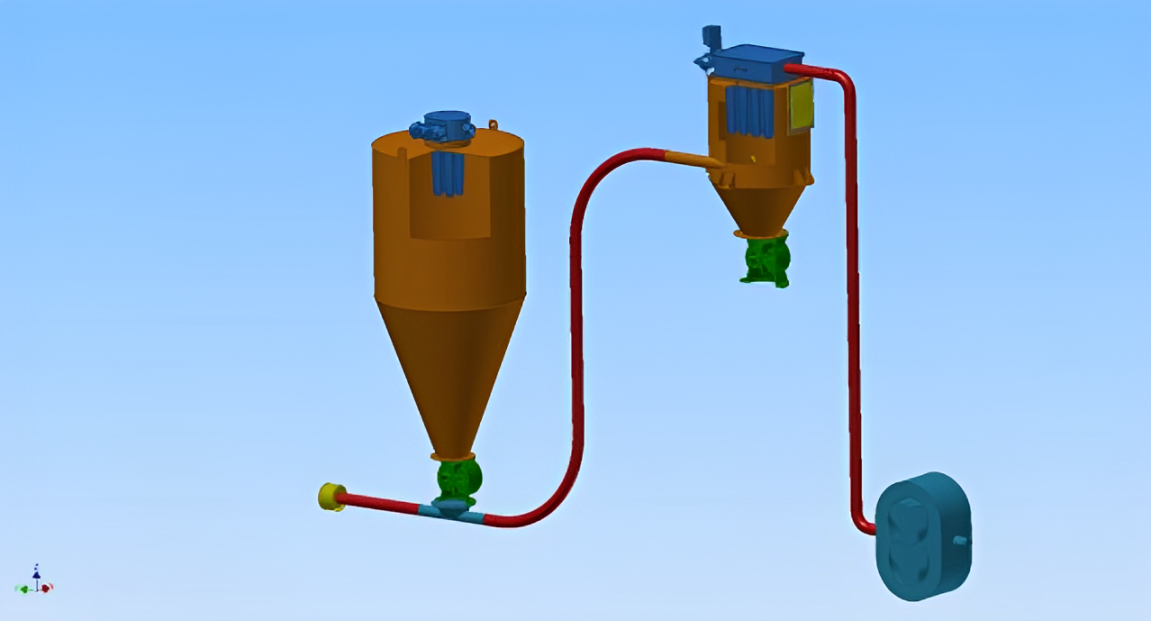
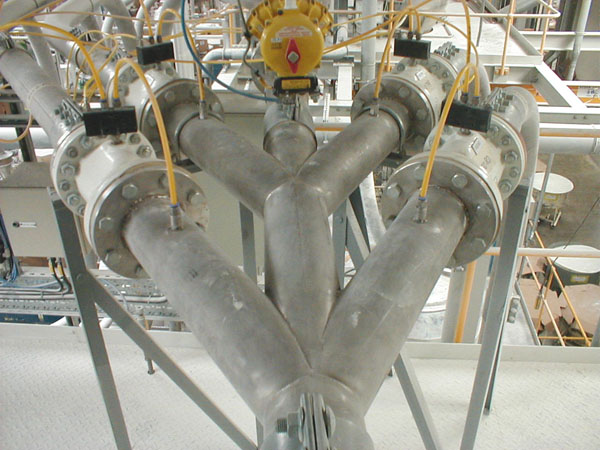
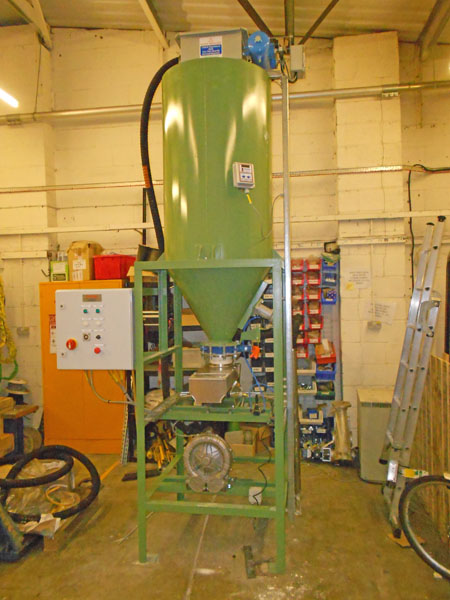
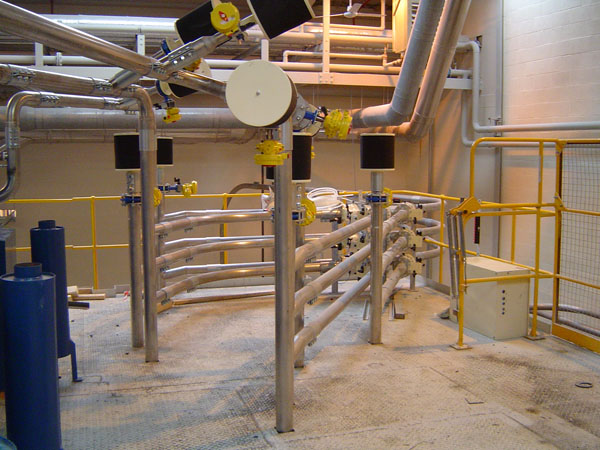
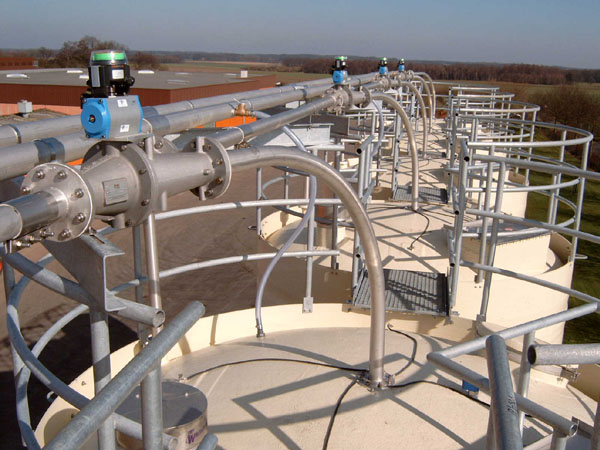
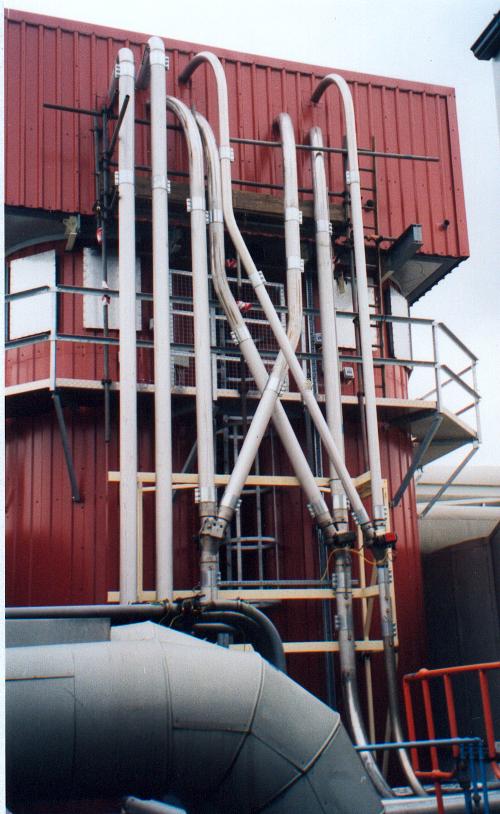
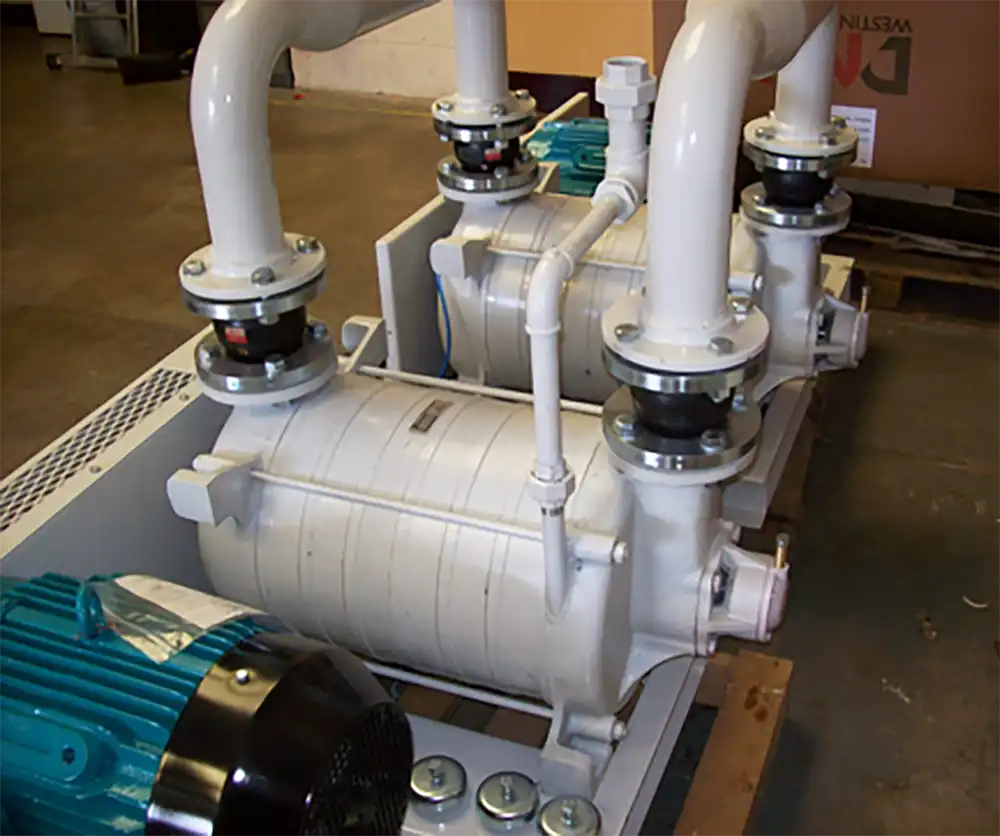
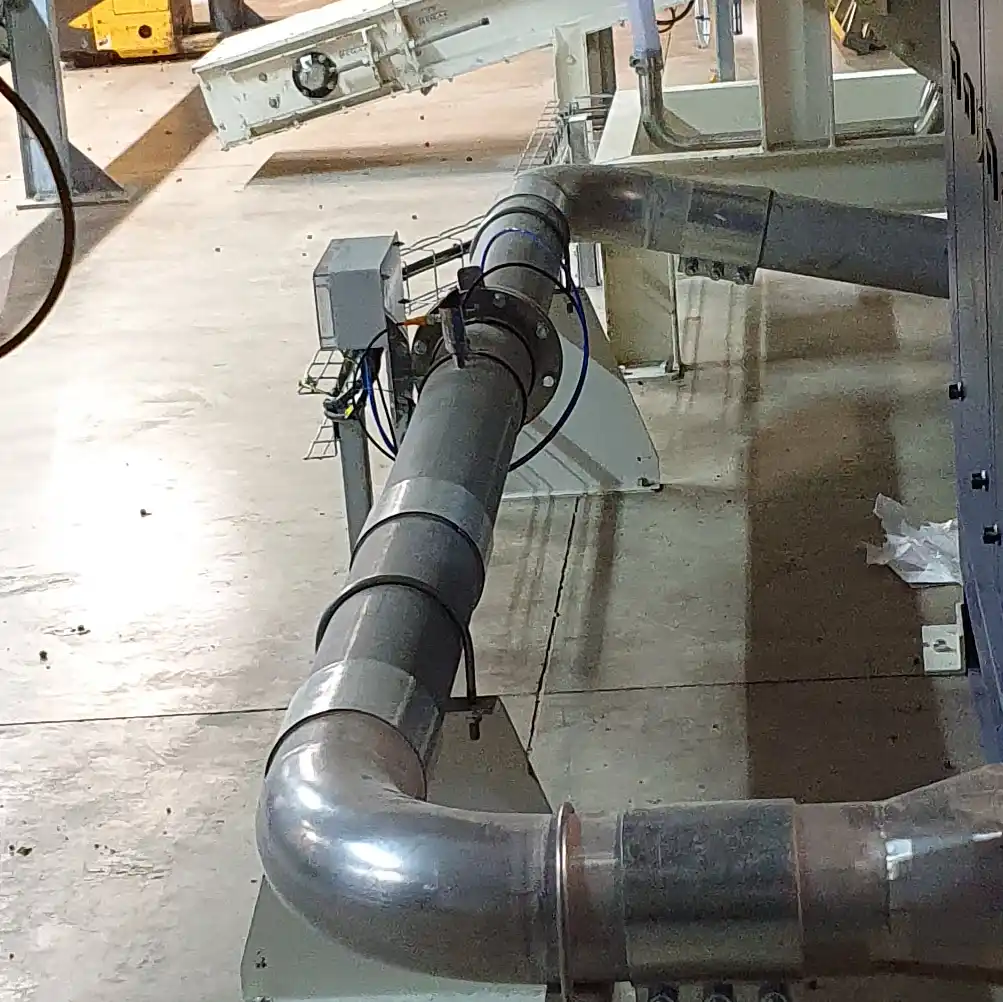
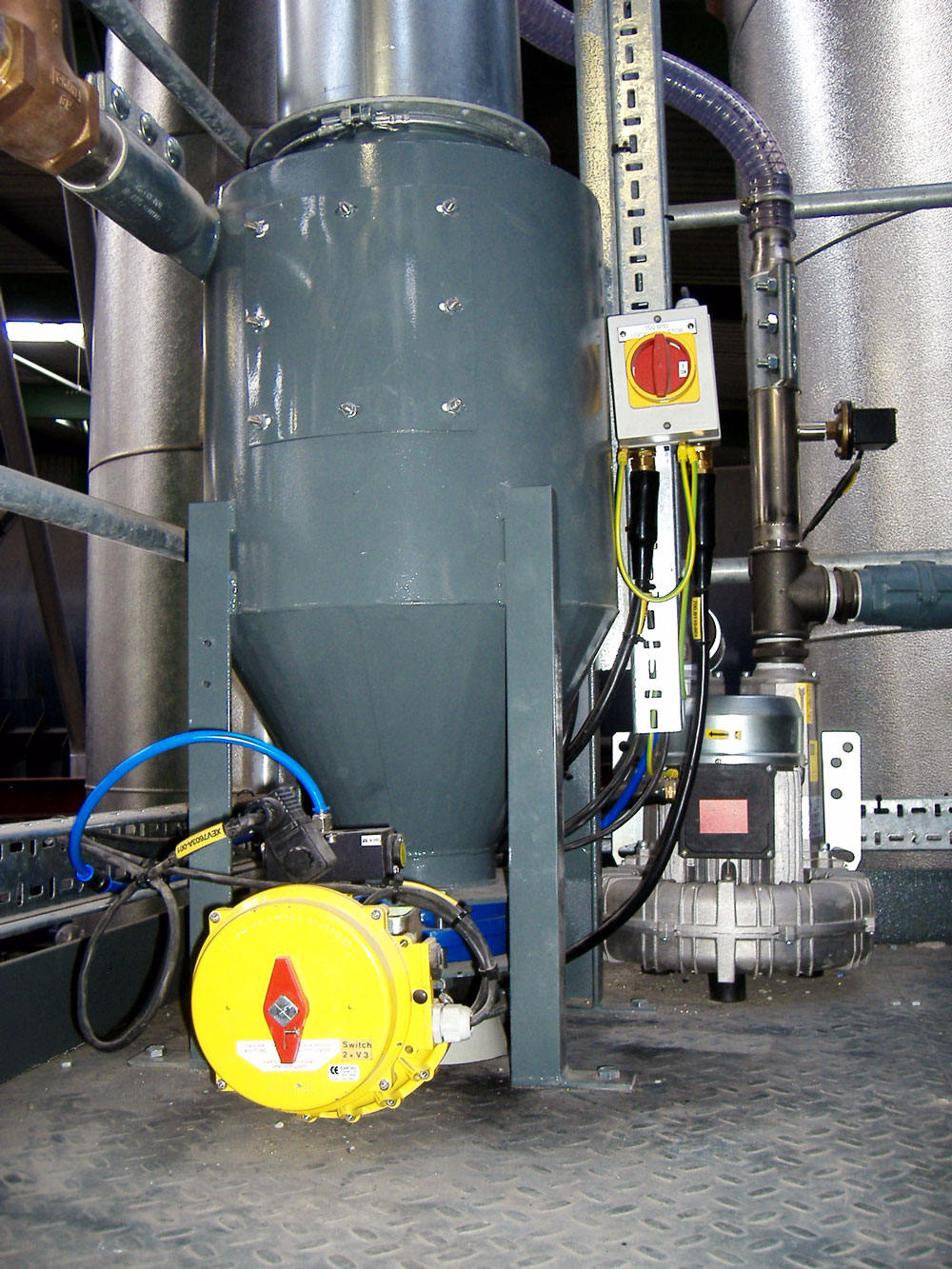
A basic vacuum conveying system uses a metering device at the inlet, a pipeline, receiver and exhauster.
As there is no positive pressure at the inlet it is not necessary to fit a rotary valve, so large particles can be fed into the vacuum conveyor system without damage. Some products will be able to feed into the system using a double walled lance inserted into the bulk of the material. Some products which don’t feed freely will need a controlled feed from an upstream process.
The receiver needs to be sealed and vacuum tight to enable the system to operate effectively.
Another possible benefit results from the vacuum conveying system being under negative pressure; potential leakage of toxic or hazardous products is prevented.
The conveying rate for a vacuum conveyor is limited by the negative pressure that can be created by different exhausters.
We would typically not design a vacuum conveyor system to operate in excess of -400mbarg.
Vacuum conveying systems are generally better suited to lower throughputs and conveying distances when compared with pressure conveying system.
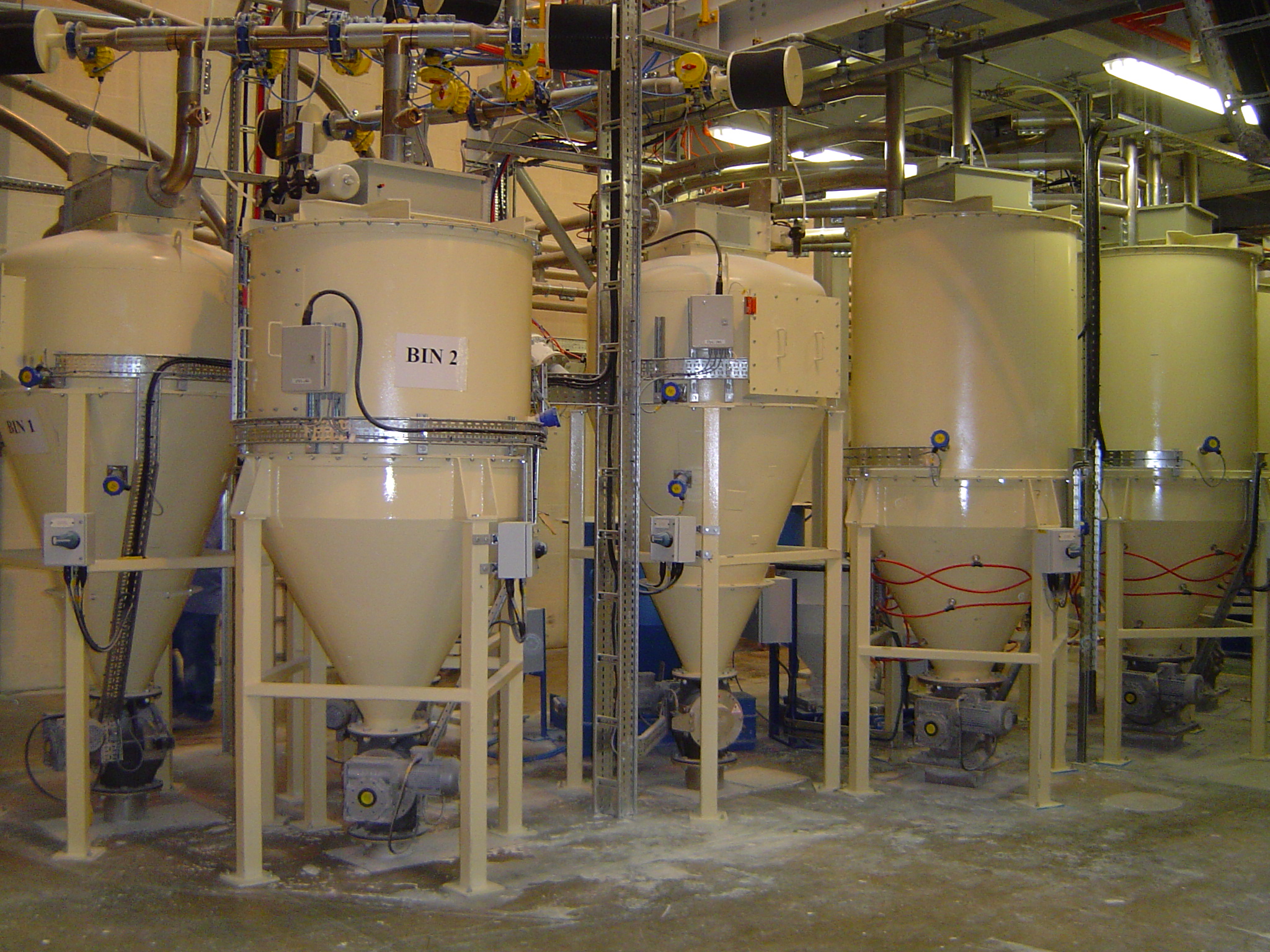
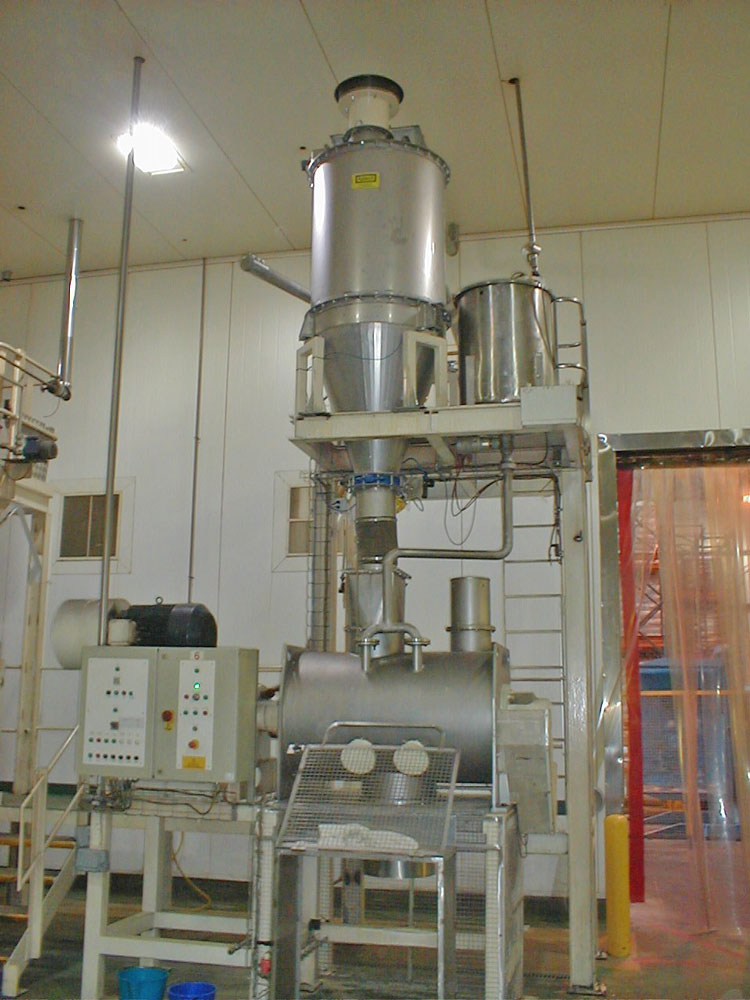
Frequently used in ‘hopper loading’ applications often known as ‘suck and dump’.
Air and products will generally have higher velocities than pressure conveying.