Murphy Pipelines
Brief
• Backfill 6ft & 8ft tunnels for an 18km stretch of gas pipe in Greater London.
Achievements
• Designed 2 systems; “small” & “large”.
• Filled the tunnels in 4 months compared to 1 year with traditional liquid grout methods.
• Aptech’s unique pneumatic conveying software.
• 100% fill of void compared with liquid grout.
Benefits
• Saved time & money with innovative methods.
• Saved around 5,000 tonnes of embedded carbon helping them win a CEEQUAL ‘Excellent’ award.
• New fill material allows pipe to move relieving stress thus reducing the risk of damage & further cost.
Customer
Murphy Group, established over 60 years now being one of the most recognised names in the building and civil engineering industry.
Challenge
Working with National Grid and Caledonian University, Murphy Group were seeking a solution that was believed practically impossible.
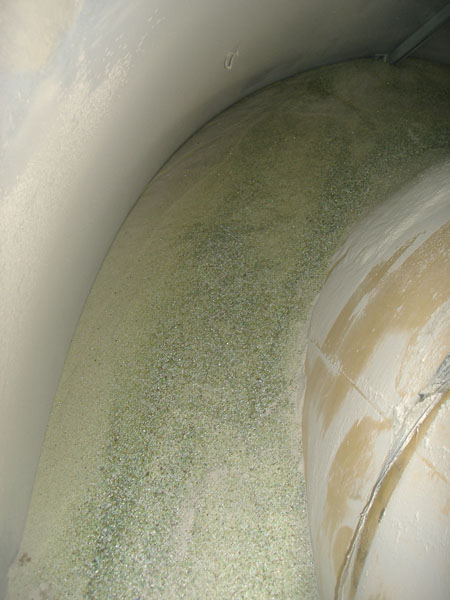
A pneumatic conveying system of several hundred meters was required to deliver sand and ground glass along the full length of a ‘pipe in tunnel’ void across its full cross section.
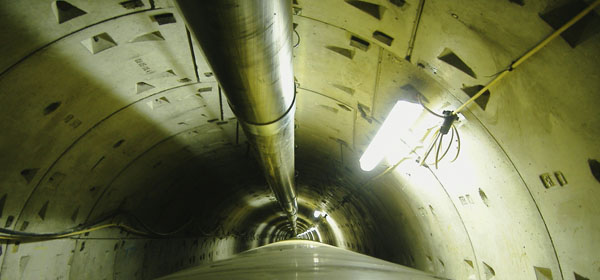
This was to provide stress free containment of a gas pipe within a 6ft and 8ft diameter tunnel along a total of 18km, in stretches of up to 1km.
Traditional liquid grout methods were not favoured due to cost and expected durations of up to 1 year. Technical limitations of grout filling and the pressing deadline of a national infrastructure project required extreme customer and task focus.
Aptech were the only company to develop a solution that we had confidence in…we were impressed with the final designs & ability to manufacture pneumatic conveying systems that would fill the tunnel effectively
Chris Rixon, project advisor.
Solution
After pipe wear tests and ½ scale filling trials it was decided that a large and small system would be needed to deliver the sand and recycled ground glass into the various lengths, routes and sizes of tunnels.
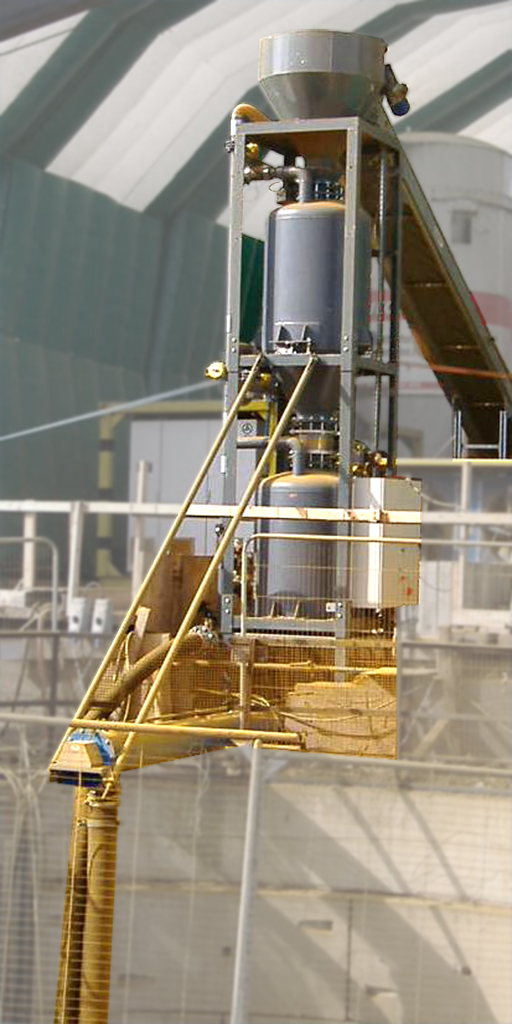
The “Small” system received material from 1Te big bags conveying at up to 14Te/hr filling tunnels up to 300m long.
The “Large” system received material from continuously filled silos serviced by a fleet of trucks at up to 60Te/hr and filling tunnels up to 700m long.
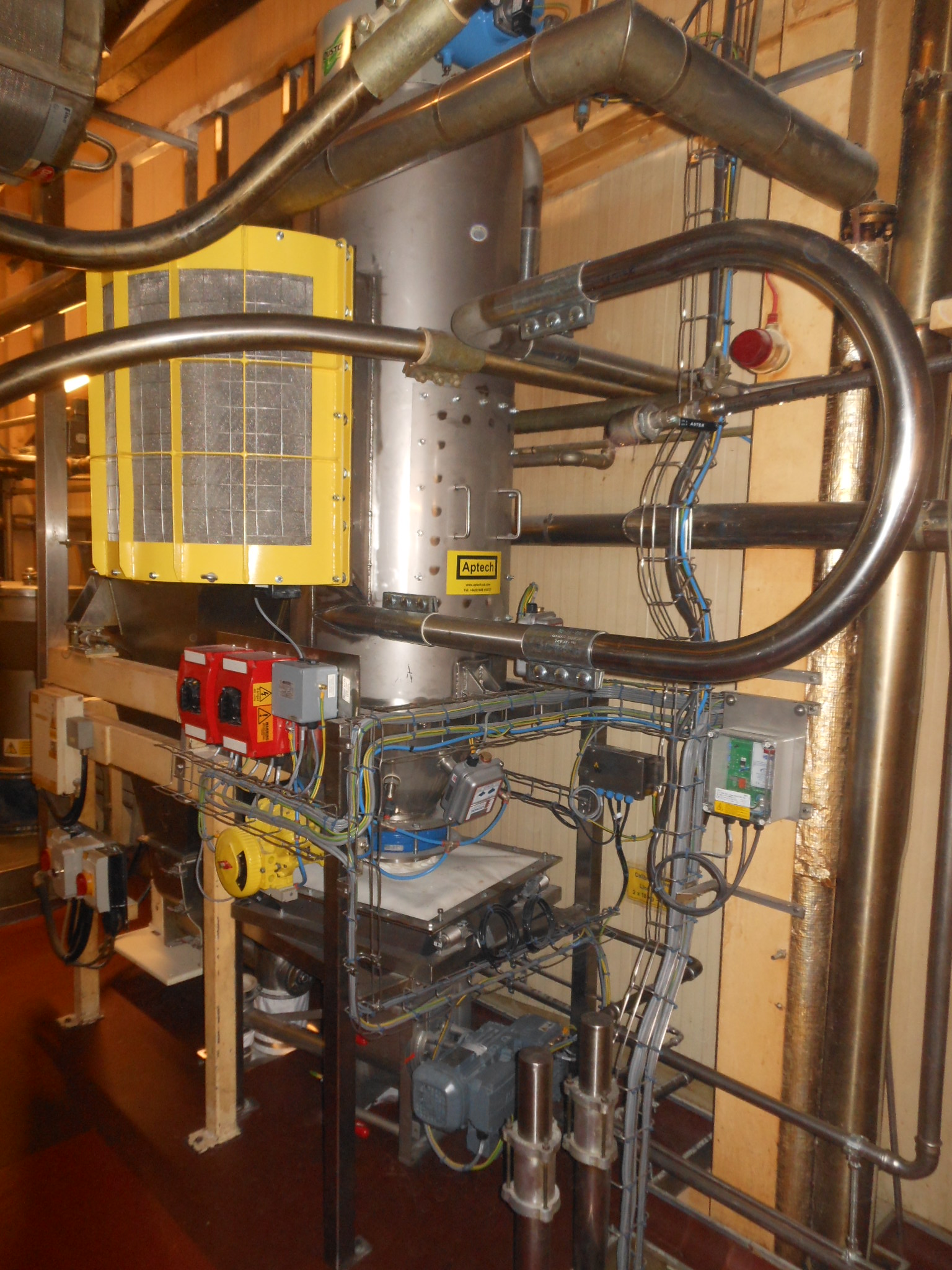
Both “stand alone” modular designs contain a blower, delivery system, air compressor and control system operating at pressures above and below 1barg. Both are also fitted with self adjusting variable speed and pressure controls in order to automatically maximise the output of each system.
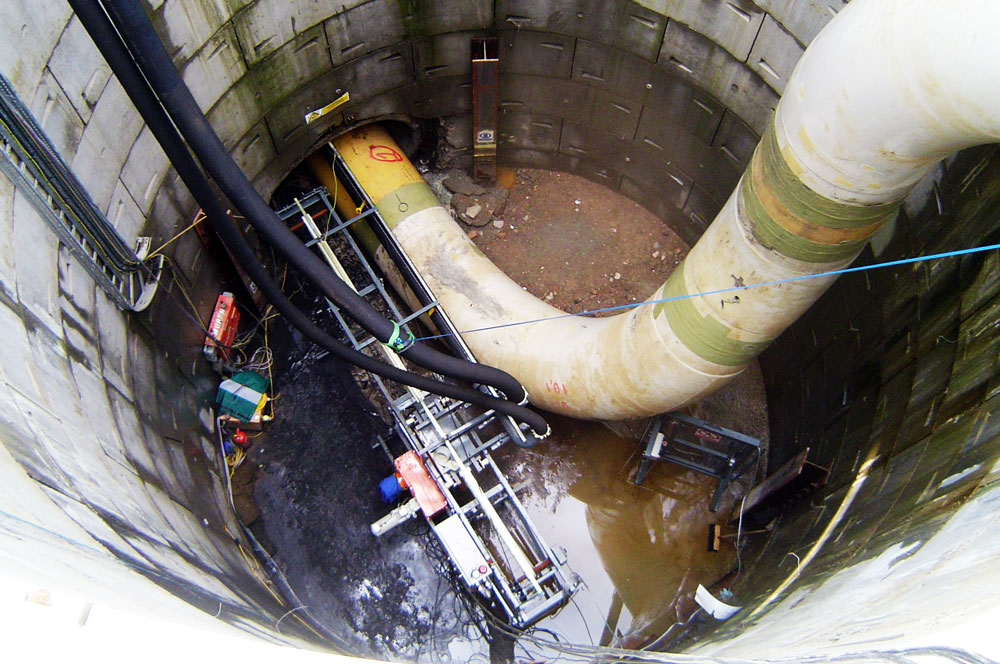
A specially designed rig for each system retracted the full length of pipework which was fixed to a rail on the tunnel roof. Sensors were used to detect the stage of fill in order to retract small distances whilst conveying.
Results
The technical criteria of filling the complete cross section was met and the deadline of filling in order for subsequent project activities to be completed in time was achieved.